After writing about Patrick Stewart last week I kept thinking about Star Trek, and about why that show still sits with me so many years later. It was never only about the ship or the warp drive. What kept me watching, and what keeps bringing me back now, was the writing. Some of those episodes are small philosophical essays dressed up as sci-fi.
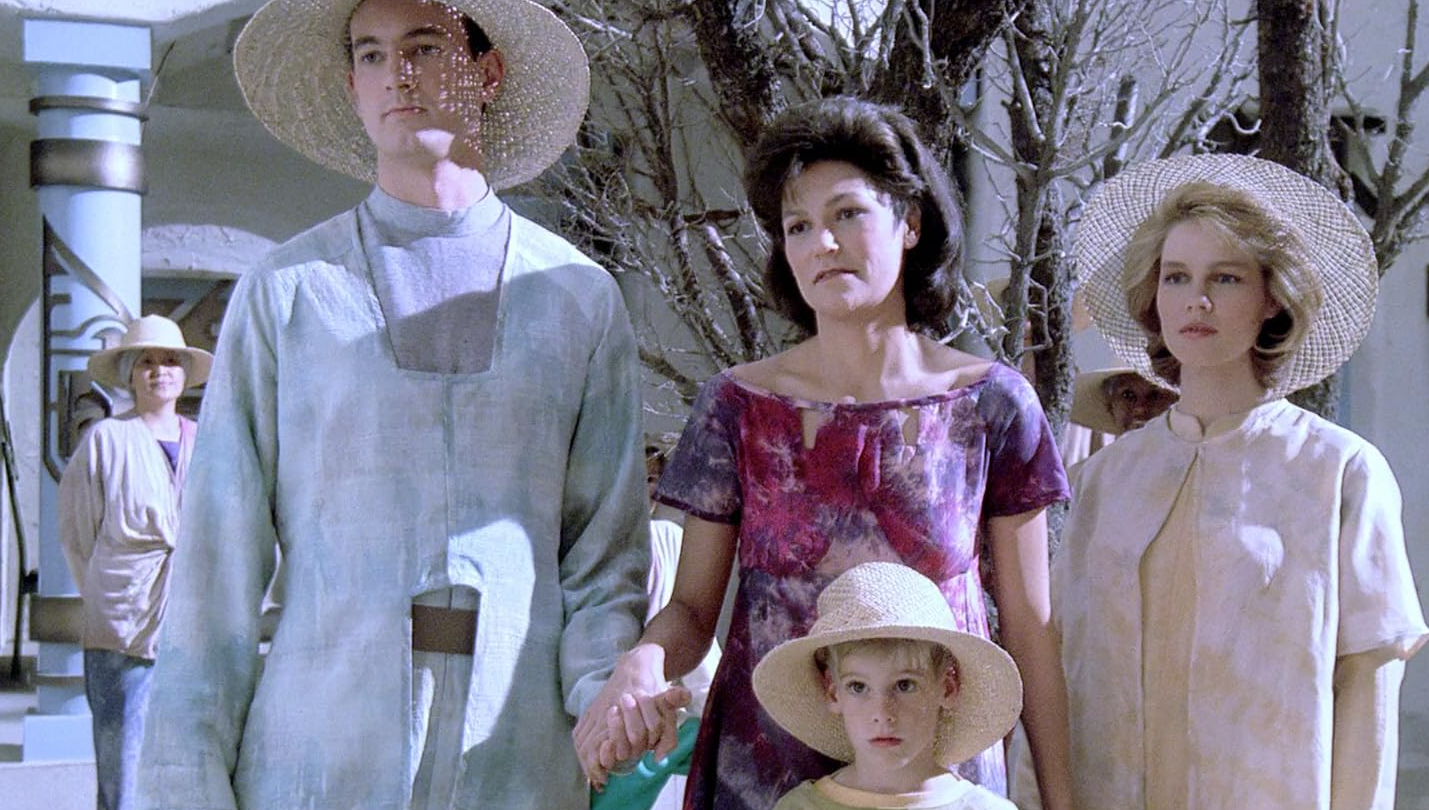
The one that comes up first is The Inner Light. A probe hits the Enterprise and Picard collapses on the bridge. Inside his head he wakes up on another planet, in another body, as a man called Kamin, with a wife named Eline who tells him he has been sick with a fever that took his memory. He does not accept it. He is Jean-Luc Picard, captain of a starship, and this village is not his life. He measures the room. He looks for proof the whole thing is an illusion. He is cold with Eline for a long time. Then at some point he stops fighting, and starts living.
He learns the flute, slowly. The first tune he manages is an old Earth song, as if part of him is still holding on to who he was. Years pass. He and Eline have a daughter, Meribor, and later a son they name Batai after a friend who died. The flute gets better. The song changes. One day he realises he is no longer playing Earth music, he is playing Kamin’s.
The planet is dying. There is a drought that never ends, and the government knows the sun is about to go nova. Meribor grows up into a scientist and keeps studying the soil as if there is still something to save. Kamin, now an old man, tells her to stop. Spend time with the boy who likes you. Live now. Make now always the most precious time. By then he has stopped being the captain who had to fix every problem. He has become a man who finally understands that the thing worth protecting is the evening on the porch with the people you love.
At the end they launch a probe into space. Kamin does not care about the launch. What matters to him in that moment is that Eline is standing there in front of him, and the probe is their village’s way of making sure someone, somewhere, one day, remembers that they lived. Picard wakes up on the bridge. Twenty-five minutes have passed. He has lost forty years and a whole family inside his own head.
The episode is not really about the probe or the dying civilisation. It is about a man who spent his whole life commanding a starship and never had any of the ordinary things, and who gets handed forty years of them inside a dream. The small life he never chose turns out to be the one he mourns. The science fiction is just the way the story gets him there.
That is what made Star Trek seductive to me. The genre was the excuse. Underneath it, the show was asking what matters, what you lose when you choose a life, what you only see once it is already gone. It took those questions seriously at a time when prime time television was mostly selling you something. It treated the audience like adults who could sit with a difficult idea for forty-five minutes.
There is a lovely breakdown of this episode by The Art Of Storytelling on YouTube. He walks through The Inner Light scene by scene and shows how the writers pulled off, in forty-five minutes, something short stories usually need a whole book to do. The channel is worth following too, he does this kind of close reading for a lot of other films and shows. If any of this made you curious, watch it.