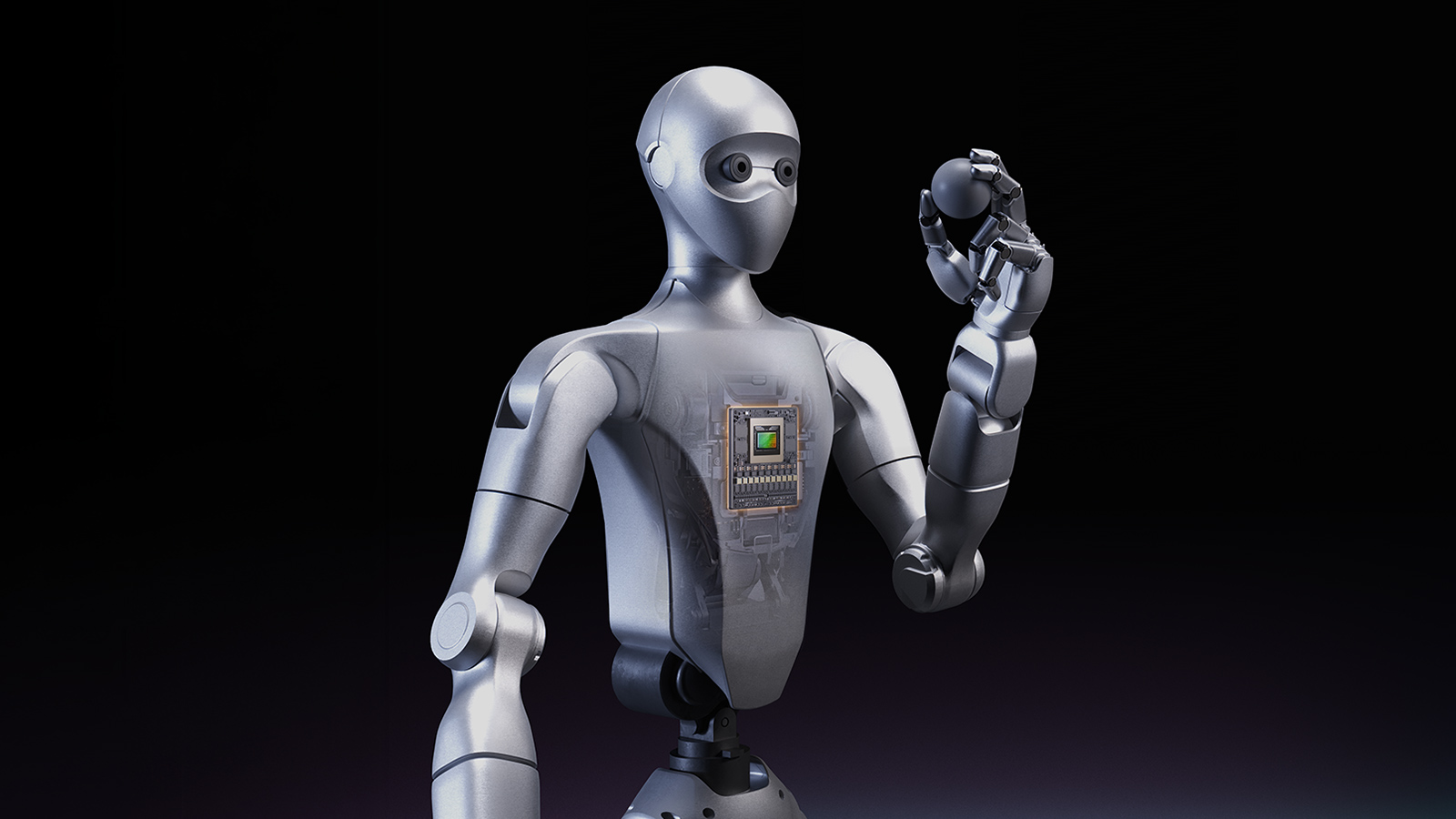
Nvidia announced the Isaac GR00T Reference Humanoid Robot at GTC Taipei. It’s an open hardware and software stack for academic research, built around the Unitree H2 Plus chassis, dual Sharpa Wave tactile hands, multi-view sensing, and a Jetson AGX Thor T5000 onboard. The software side is the full Isaac suite: Teleop for data capture, Sim and Lab for training, open foundation models, ROS middleware, and on-device inference via Jetson Thor. Partner institutions include Ai2, ETH Zurich, Stanford Robotics Center, and UC San Diego. Available late 2026 from Unitree.
The reason this matters is bigger than the specs. Up until now, every humanoid robotics lab has been reinventing the same hardware stack. Different chassis, different sensors, different compute, different middleware. That fragmentation makes it almost impossible to compare results across labs. One team’s breakthrough doesn’t translate to another’s hardware. A shared reference design changes that. Researchers can finally focus on the algorithms and the models, not on re-engineering the platform underneath.
Nvidia clearly understands the strategic move here. By open-sourcing the software stack and anchoring it to accessible hardware, they’re positioning themselves as the infrastructure layer for physical AI research. This is exactly what happened with cloud AI training. CUDA, then frameworks built on CUDA, then models built on those frameworks. By the time the field matured, Nvidia owned the bottom of the stack and the rest of the industry had no real alternative. The same play is now being run in robotics, just earlier in the curve.
If this works the way Nvidia is hoping, every humanoid foundation model trained in the next few years will assume Jetson Thor on the edge, Isaac Sim in the loop, and the broader CUDA ecosystem underneath. That’s not a product strategy, that’s a moat strategy. And in a field that is genuinely about to explode commercially, anchoring the research stack now is exactly when you do it.