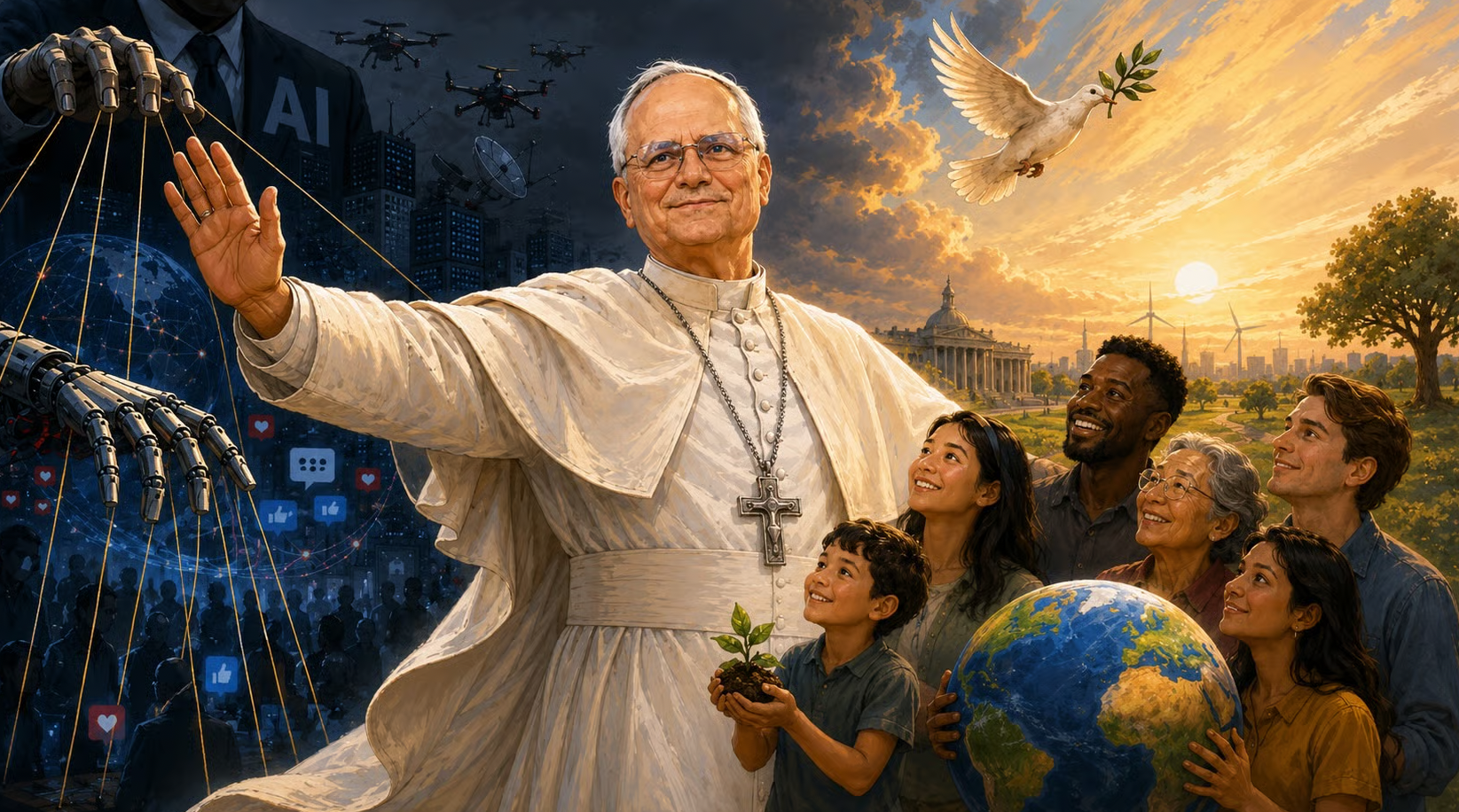
Pope Leo XIV’s first encyclical, Magnifica Humanitas, was released on May 25. It is entirely about artificial intelligence. The Pope issues encyclicals rarely, and the choice of subject for a first one is a deliberate signal. Dedicating it to AI tells you how seriously the Catholic Church is taking what is coming. Leo frames AI as the Industrial Revolution of our time, with the same potential to reshape labour, dignity, and the structure of society. The encyclical leans on two biblical metaphors: the Tower of Babel for unchecked technological ambition, and the rebuilding of Jerusalem’s walls for collaborative human effort. Its core position is that technology is never neutral. It carries the values of whoever builds, funds, and deploys it.
The detail that struck me most was who Leo chose to stand next to him at the release. Chris Olah, co-founder of Anthropic and the person who leads their interpretability research. The Pope and a 33-year-old atheist AI researcher, sharing a stage to call for a partnership between the Catholic Church and the tech industry on AI safety. That is not a small symbolic choice. Out of every frontier lab the Pope could have invited, he picked Anthropic. The company that has been the most vocal about safety, the most willing to say no to unrestricted military use, and the most explicit about the gap between what AI labs can do and what they should do. Olah’s own framing at the release was that frontier labs operate inside incentives that can sometimes conflict with doing the right thing, and that the world needs people outside those incentives who insist on safety.
What the Vatican is doing here is interesting because it is positioning itself as one of those outside voices. A 2,000-year-old institution stepping in to provide a counterweight to a 15-year-old industry where the incentives are heavily tilted toward speed and scale. The encyclical doesn’t propose technical solutions. It proposes a framing: that AI development needs spiritual and cultural foundations as well as regulatory ones, and that the protection of human dignity in this era cannot be left to the market or to governments alone.
I find this moment significant. When the Industrial Revolution arrived, the Church took decades to respond meaningfully. The fact that Leo is leading with AI as his first encyclical, and is doing it alongside an AI lab that is openly worried about its own field, suggests the institutional reaction time has compressed dramatically. Whether the partnership produces anything concrete is another question. But the signal itself, that the Vatican sees AI as the defining ethical question of this generation and has chosen the most safety-focused lab to engage with first, is the story.